

Disability Pride Month Reflections: “We Will Not Go Back!”
Written by: Sascha Bittner (with her mom, Emily Medders Bittner, who was along for the ride)
This Disability Pride Month, as I reflect on how far we’ve come in making America more inclusive for disabled people, I also watch in despair as the programs that have helped us achieve our goals are threatened, and our rights are deemed disposable.
I was born in Bakersfield, CA in 1973, to a single, teenage mother, at a time when many disabled children were still placed in institutions. Expectations were very low, and inclusion was almost non-existent. When I was diagnosed with cerebral palsy at six months old, there was little early intervention, so the pediatric neurologist told my mom just to take me home and love me. A close family member advised my mom to consider institutionalizing me. That gives you some idea of the situation for developmentally disabled people in the year I was born.
Thankfully, my mom had her own ideas, and she moved us to Vermont when I was two, so I could attend a school with early intervention and inclusion, a combination very hard to find at the time. I received comprehensive, daily therapy, and also attended general education preschool and kindergarten. Even though I really thrived in that program, when I was just three, an esteemed pediatrician at Dartmouth Medical School told my mom I’d never be able to do much of anything. Again, my mom had a different opinion.
In 1980, when I was six, we moved to San Francisco. Thankfully, San Francisco had recently closed its totally separate public school for disabled students, but I was still segregated in special education classes and didn’t have access to the level of therapeutic and educational support I had in Vermont. My mom faced years of struggle to get me the support and services I needed and ended up teaching me to read and write on her own, after being told I’d never be able to master those skills. She wasn’t able to get me included in general education again until the middle of sixth grade. At that time in San Francisco, wheelchair accessibility was also a huge challenge. There were no ramped platforms for streetcars, curb cuts, or bus lifts, and many restaurants, movie theaters, and other public spaces were inaccessible to me, so I faced many barriers at school and in my community.
Despite the bleak situation for disabled people in the 1970s, that decade was also the beginning of transformational legislation to address those inequities. 1973 was the year of Section 504 of the Rehabilitation Act, a foundational civil rights law prohibiting discrimination against disabled Americans in federally funded programs, while mandating equal access to education, employment, healthcare, and public services. In the same year, the Lanterman Act, which provides developmentally disabled Californians the right to services and supports they need for “integration into the mainstream life of the community” was expanded to include people with cerebral palsy (like me). 1973 was also the year In-Home-Support-Services (IHSS) was established to provide personal care and domestic services to help low-income elderly and disabled Californians live independently and safely in their own homes, instead of nursing homes or state hospitals. In 1975, the landmark “Education for All Handicapped Children Act,” now called the Individuals with Disabilities Education Act (IDEA) was passed, guaranteeing disabled students a free, appropriate public education in the least restrictive environment.
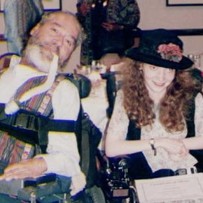
Photo of Ed Roberts and Sascha.
What we also didn’t initially realize was that the Bay Area, especially Berkeley, had become the center of the growing disability rights movement. My mother had never known a person with cerebral palsy before me, and she initially bought into the “medical model” of disability, so she thought she somehow had to “fix” me. As we became more exposed to the disability rights movement, she began to see disability as a social condition and civil rights issue, which meant the solution wasn’t fixing me, but fixing the world by changing attitudes, changing laws, and creating more accessible, accommodating, and inclusive communities. As a result, when I was bullied in the 8th grade because of my disability, my mother wanted not only to comfort and support me personally, but to address the problem more widely. She found a nonprofit, KIDS Project, that had been started at the Center for Independent Living in Berkeley to ensure more inclusive, welcoming schools for all students. KIDS Project brought disabled guest speakers into classrooms to talk about their lives, the disability rights movement, barriers, accessibility, independent/interdependent living, discrimination and other issues in order to provide information, dispel stereotypes, recognize similarities, but also appreciate differences. We became involved in the disability rights movement, and I had the great privilege of learning from such trailblazers as Ed Roberts, Judy Heumann, and my fellow performers in the Wry Crips Disabled Women’s Theater Group, while developing a deep sense of pride in my community and culture.
Then in 1990, a truly watershed moment occurred when the Americans with Disabilities Act (ADA)—the most sweeping civil rights law to date, prohibiting discrimination in all areas of public life was signed by the president on July 26, a day now referred to as National Disability Independence Day. I was almost 17-years-old, sitting in a cheering audience at the Center for Independent Living in Berkeley, watching the televised ceremony as the ADA was signed into law. That was such a unifying moment, of unprecedented promise, with a trajectory that seemed to indicate continuing progress to include disabled Americans as full, integrated members of our communities. Mom and I tried to do our part in contributing to that trajectory as she became director of KIDS Project, and I became program manager. For twenty years, we educated the Bay Area about the value of…yes…diversity, equity and inclusion (DEI).
Sascha and Judy Heumann and an unidentified person.
Despite the Dartmouth pediatrician’s prediction, I’ve lived a very rewarding life. Home and Community based caregiving support (funded by Medicaid and the Regional Center) has enabled me to live fully and productively in the community, instead of in an institution or nursing home. I was able to attend and graduate from the University of California at Berkeley because I had someone getting me up each morning, dressing me, taking me to the bathroom (and so on), and with that help I was also able to provide disability awareness programs to thousands of students through KIDS Project.
I am currently a member of the National Council on Disability appointed by House Speaker Emerita, Nancy Pelosi, and reappointed by the current House Minority Leader, Hakeem Jeffries. I’m a past chair and current member of the California State Council on Developmental Disabilities (SCDD), and in 2024, the Governor appointed me to the Master Plan on Developmental Disabilities Stakeholder Committee. I also serve on the Disability and Aging Services Commission in San Francisco, and as a member of the national steering committee for Hand in Hand, the Domestic Employers’ Network (advocating for homecare workers), in addition to other community work and activism.
I have been able to live such a constructive life because of legislation like IDEA and the ADA, in addition to the critical assistance I receive every day from homecare and self-determination providers. Any cuts to homecare funding would be devastating for me and others like me, and a huge setback for the vision of the Lanterman Act. In fact, I have fought since I was a teenager to expand needed services in order to improve lives and keep members of my community out of nursing homes.
Looking back, it is amazing how much my life was positively impacted by the tireless efforts of disabled people, family members and allies, with so much progress since 1973. But when watching the signing of the ADA in 1990, I never would have predicted other Americans would be so committed to rolling back that progress. Now I find my life’s work and my very freedom under attack by such initiatives as the efforts to gut DEI, to cut Medicaid, and to move the Office of Special Education and Rehabilitative Services–which administers IDEA–from the Department of Education to agencies much less equipped to handle key responsibilities. But the most chilling development might be the recent Department of Justice memo arguing that states are not required to provide the home and community-based services that help keep me and other disabled Americans out of institutions.
When we are told these efforts will help “Make America Great Again,” to what great era in America do they refer? Was it when people like me were warehoused in institutions and completely excluded from civic life? Was it when public transportation, restaurants, movies, and schools were inaccessible and unaccommodating, and we were stigmatized, discriminated against, and treated with contempt? When my mom struggled to get me included in regular education, or when we had to fight to have an entrance ramp installed at my high school, and for access to extracurricular activities?
California was at the forefront in liberating developmentally disabled people from institutions and supporting us in our communities. We must work to ensure California continues to serve as a beacon of hope in these challenging times. During Disability Pride Month, remember that pride is not only about joy, but resistance. The promise of America for people like me has only just begun to be realized. We must not, and we will not go back.
Continue the Journey
You just read about Sascha. Want to learn more about the supports that helped make her journey possible?
Explore the types of regional center services:
https://scdd.ca.gov/regionalcenterservices/
Legal Disclaimer:
EIN Presswire provides this news content "as is" without warranty of any kind. We do not accept any responsibility or liability for the accuracy, content, images, videos, licenses, completeness, legality, or reliability of the information contained in this article. If you have any complaints or copyright issues related to this article, kindly contact the author above.
